
 Book Now (Save £60)
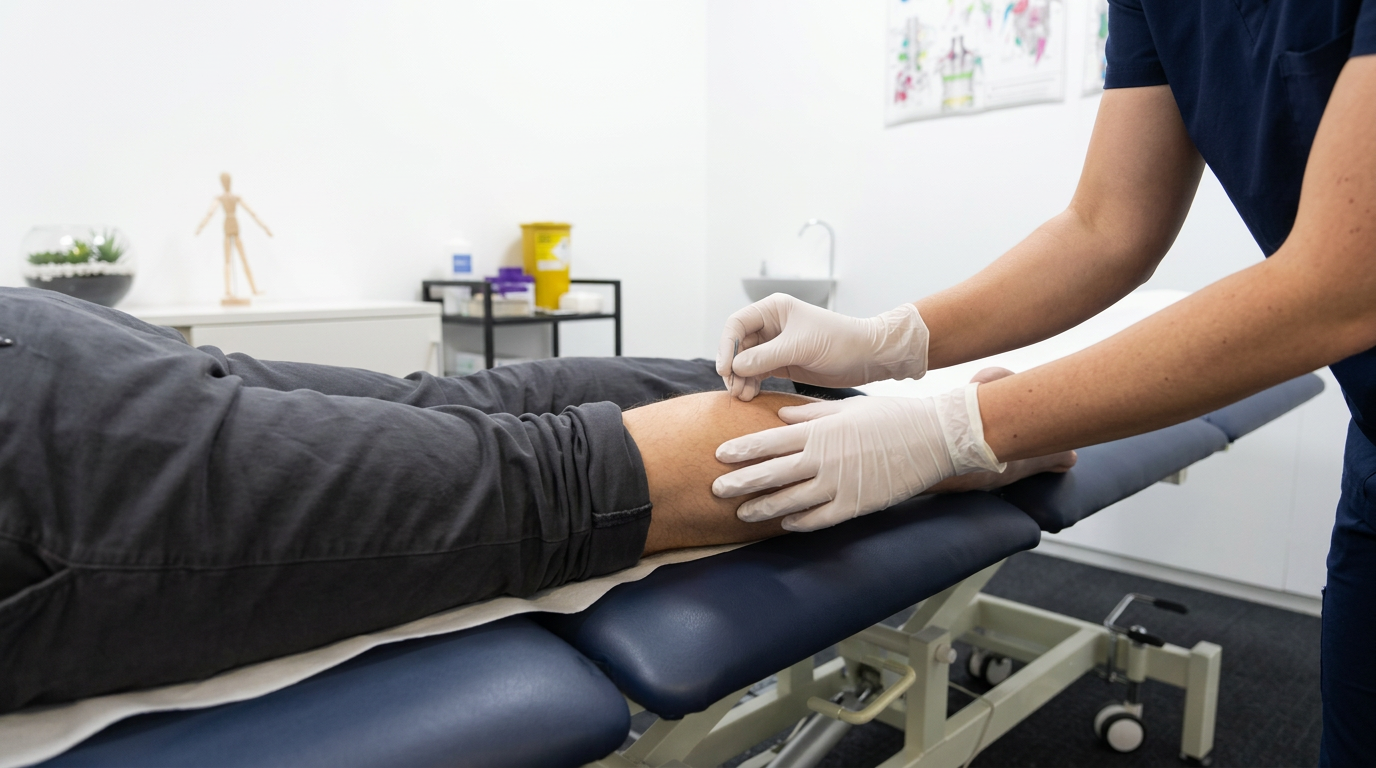
Muscle pain in your neck, back or shoulder that keeps returning can leave you comparing two needle treatments. This guide explains the difference and what dry needling in Reading involves at Kinetic Care Physiotherapy & Acupuncture Clinic, a physiotherapy clinic in Green Park.
What is dry needling?
Dry needling is a physiotherapy technique. Fine needles go into a muscle, often at a taut band found during assessment.
It is used for targeting trigger points. A trigger point is a tender spot where muscle fibres feel tight. The aim is to reduce muscle tension and tightness in that soft tissue, which some people find helps with reducing pain. You may feel a brief twitch response or a dull ache.
In the UK, dry needling is used by physiotherapists and osteopaths (both regulated professions), and by some other practitioners with specific training. It is worth checking a practitioner’s registration and training before booking. At Kinetic Care it is delivered by Rupali Mandve, an HCPC-registered physiotherapist. See the dry needling page.
How is Western acupuncture different?
Western acupuncture uses the same fine needles, but the reasoning follows Western medical science. At Kinetic Care it does not rely on traditional Chinese medicine ideas such as energy flow, and is explained through nerves, muscles and the nervous system.
Needle insertion through the skin and muscle is thought to stimulate sensory nerves. This may influence how the central nervous system handles pain signals. Points are chosen using knowledge of anatomy.
The Western acupuncture page has more detail.
Medical acupuncture and dry needling side by side
| Dry needling | Western acupuncture | |
|---|---|---|
| What it targets | Trigger points or taut bands in a muscle | Points chosen for their nerve supply |
| What it may feel like | A brief twitch or dull ache | A mild ache, tingling or heaviness |
Trigger point or wider pain: which might suit you?
The choice is made together after assessment. If pain sits in one spot and a tight, tender band reproduces it, dry needling may be considered. If it feels widespread or sensitive, the other approach may be discussed.
People come to us with acute and chronic painful conditions, such as low back pain, neck pain, hip pain, tension-type headaches or sports injuries. Needling may be considered as part of a plan to support musculoskeletal conditions, alongside rehabilitation exercises. If you would rather avoid needles, manual therapy, taping and exercise are alternatives.
Who should check with us first?
Needling is not right for everyone. Tell Rupali about any of these:
- Pregnancy
- Bleeding disorders or blood-thinning treatment
- Needle phobia or strong anxiety about needles
- Infected or broken skin over the area
- Some implanted devices, such as pacemakers
This list is not exhaustive. If needling is unsuitable, other physiotherapy options remain.
What happens in a dry needling session?
Assessment comes first, and needling is never automatic. At your first appointment, Rupali listens to your history, then examines how you move and your range of motion, and asks about any health concerns.
If needling is suitable, she explains it and asks for your consent. You can decline or stop at any time. Every needle is new, sterile and single-use.
Afterwards, some people notice temporary soreness or minor bruising, usually mild and short-lived. Tell Rupali if anything worries you. You leave with exercises and self-management advice, so needling is one part of your physio treatment plan. The aim is to ease pain and tension so moving feels easier, though responses vary and pain relief cannot be promised.
Questions people ask
Does dry needling hurt?
You may feel a brief twitch or dull ache. Tell Rupali and she can adjust or stop.
What are the downsides of dry needling?
You may have temporary soreness or minor bruising. It is not suitable for everyone.
Is dry needling evidence-based?
Research on dry needling is still developing and findings are mixed. At Kinetic Care it is offered alongside therapy and exercise, which have a stronger evidence base, never on its own.
Do I need a GP referral?
No. You do not need a GP referral for private physiotherapy, and you can book directly. This is separate from NHS referral routes.
To talk it through, book an assessment with Rupali at Green Park, or call 07350 350265 to ask a question first.
Comments are closed