
 Book Now (Save £60)
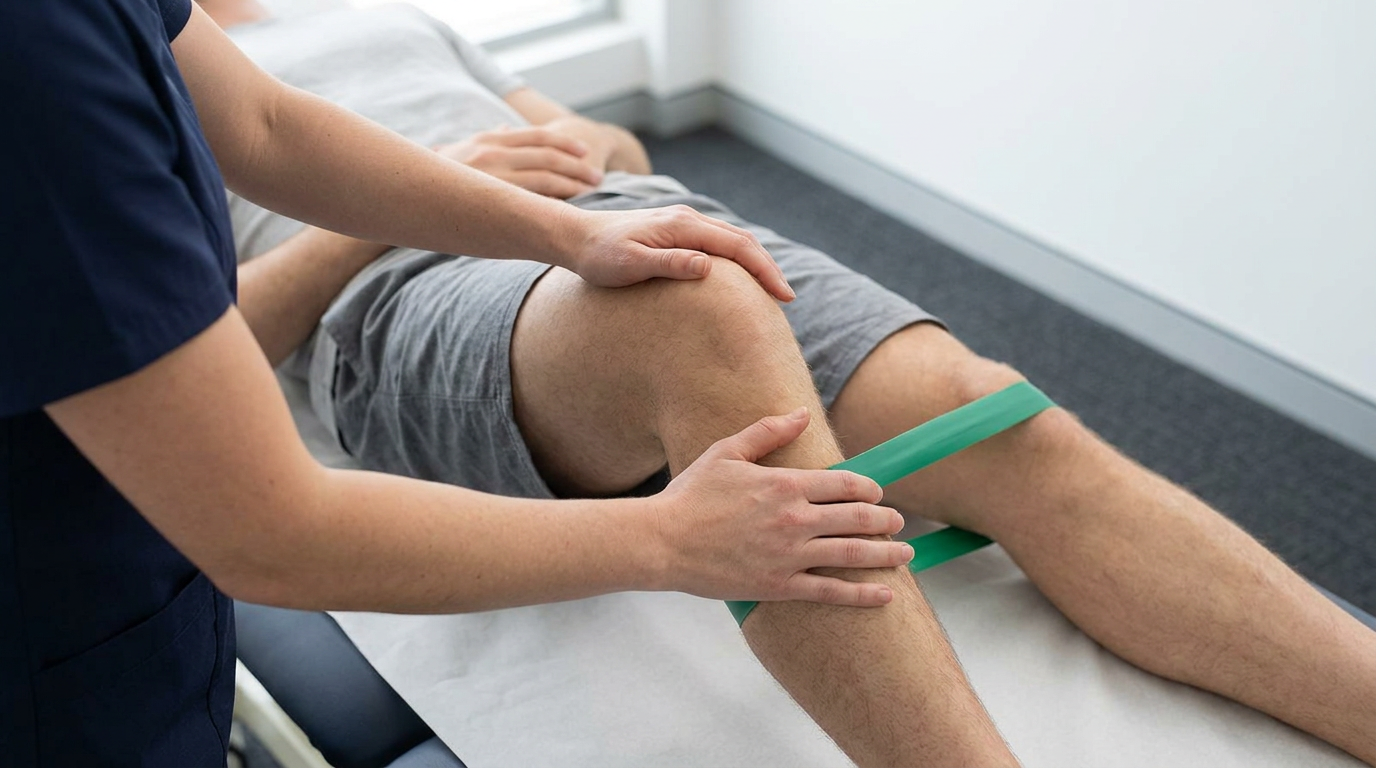
If you live with arthritic joint pain, you know how much it can shape your day. Getting out of a chair or climbing the stairs can feel like hard work.
This guide explains what to expect from treatment, and what it cannot do. It also covers self-management and when to see your GP.
What is arthritis, and what are the common symptoms?
Arthritis is an umbrella term for conditions that affect the joints. Osteoarthritis is the best known and is often age-related, as the cartilage that cushions a joint changes over time. Common causes include past injury, age and family history.
Rheumatoid arthritis is different. It is an inflammatory condition that needs medical care from your GP. Physiotherapy may sit alongside that care.
The common symptoms include pain and stiffness, especially after sitting or first thing in the morning. You may also notice swelling around the joint.
Joint pain can also change how you move, which may lead to reduced mobility. Daily activities and everyday tasks can start to feel like effort.
Can a physiotherapist help with arthritis?
Treatment from a physiotherapist cannot undo or cure arthritis. It aims to help reduce pain, support joint function and keep you moving. The physiotherapist’s role is to assess, explain and guide you.
Stronger muscles and better strength around a sore joint may help share joint load. This is one reason movement matters.
A physio can assess your movement and recognise signs that fit arthritis. An accurate diagnosis may still need your GP. They can arrange tests, such as an X-ray or blood tests, or refer you to an orthopaedic or rheumatology team.
What happens at your first appointment
At Kinetic Care Physiotherapy & Acupuncture Clinic, you see Rupali Mandve. She is the founder and an HCPC-registered physiotherapist who also practises Western acupuncture.
She has over 15 years’ experience in India and the UK. Her areas of practice include MSK physiotherapy, women’s health physiotherapy and sports injury management.
Your first appointment starts with a thorough assessment. Rupali asks about your medical history, your symptoms and how they affect your work and home life.
She will assess your movement, your full range at each joint and your posture. A strength assessment shows where you may have reduced strength. It looks at your musculoskeletal system as a whole, not just the sore joint.
Together you then build a personalised treatment plan. Rupali will personalise it to your job and goals.
How a tailored exercise programme may help
A tailored exercise programme is often the centre of your plan. Exercise therapy aims to help strengthen the muscles that support a sore joint and keep it moving. It is an evidence based part of managing osteoarthritis, and NICE guidance puts it at the core of care.
You may get a short home routine, not a long sheet of exercises. Your physiotherapist shows you how to adjust it on better and worse days.
Improving mobility takes regular practice. It may help you build strength, and better muscle strength may make everyday life feel easier. The aim is to help you move with less worry.
Other treatments that may be part of your plan
Your plan may include manual therapy, such as joint mobilisation, soft tissue and myofascial work. These hands-on techniques may help ease stiffness and make movement more comfortable.
Western acupuncture uses fine, single-use needles that stimulate nerves, muscles and connective tissue. This may influence how your body processes pain. Current NICE guidance for managing osteoarthritis does not recommend acupuncture, so exercise stays the foundation of your plan. If you would like to try acupuncture alongside it, that is something to discuss with Rupali at your assessment.
Your physiotherapist may also use kinesiology taping, dry cupping or IASTM. Kinetic Care offers electrotherapy too, including interferential therapy, therapeutic ultrasound and TECAR. Rupali will explain each option before you decide.
What if arthritis is causing wrist pain?
Joint problems can affect the hands and wrists, and desk work may make wrist pain feel worse. Wrist problems can also come from tendon problems or nerve irritation, so assessment matters.
Your physiotherapist can look at how you use your hands at work. If wrist pain follows a fall or injury, see your GP first.
Exercising safely at home and during a flare-up
Exercising safely means finding a level that feels manageable and building up slowly. Pace your activity and spread heavier jobs through the day. Warm up your joints with a few minutes of gentle movement first.
A flare-up can bring more pain and inflammation than usual. Keep gently active if you can, and reduce the intensity rather than stop. Ask your physiotherapist to help you plan for it in advance.
Swimming or exercise in water may feel easier. The buoyancy of water takes some body weight off your joints. Staying active also supports your overall health.
If you work at a desk, small changes may help. Long sitting can add to backache and stiffness or pain.
- Change position often, and move for a minute or two at intervals.
- Keep your feet and back supported.
- Set your screen at a height that avoids craning your neck.
- Keep your keyboard close so your shoulders and wrists stay relaxed.
- Take breaks from repetitive hand tasks.
Note what you did on better and worse days. This helps you and your physiotherapist spot what affects your symptoms.
When to see your GP
Physiotherapy may help you manage arthritic joint pain, but some symptoms need medical attention first. Contact your GP promptly, or seek urgent care if you feel unwell, if you notice:
- A joint that is suddenly hot, red or swollen
- A fever or feeling generally unwell alongside joint pain
- Sudden, severe pain
- Unexplained weight loss
- Any symptoms that worry you or that change quickly
If you are unsure whether you need a medical check first, speak to your GP, another healthcare professional or NHS 111. Call 999 in an emergency.
Frequently asked questions
Is physio any good for arthritis?
A physio aims to help you manage pain and keep moving. It cannot undo the condition, but some people find exercise and self-management advice helps them stay active. Your physiotherapist will explain what is realistic for you.
Can a physiotherapist recognise signs of arthritis?
Your physiotherapist can recognise signs that fit the condition from your history and how you move. Confirming it may need tests arranged by your GP.
Do I need a GP referral?
Please ask when you get in touch. If you have any of the symptoms listed above, see your GP first.
How many sessions will I need?
This depends on your assessment and cannot be predicted in advance. Your physiotherapist will discuss the plan with you.
Booking a physiotherapy assessment in Green Park, Reading
Kinetic Care is a physiotherapy clinic at Green Park, Reading RG2 6UB, near M4 junction 11. It is a practical option if you live or work in Reading or elsewhere in Berkshire.
To learn more, read about arthritic conditions. When you are ready, book your appointment online, or call 07350 350265 to ask questions first.
Comments are closed